
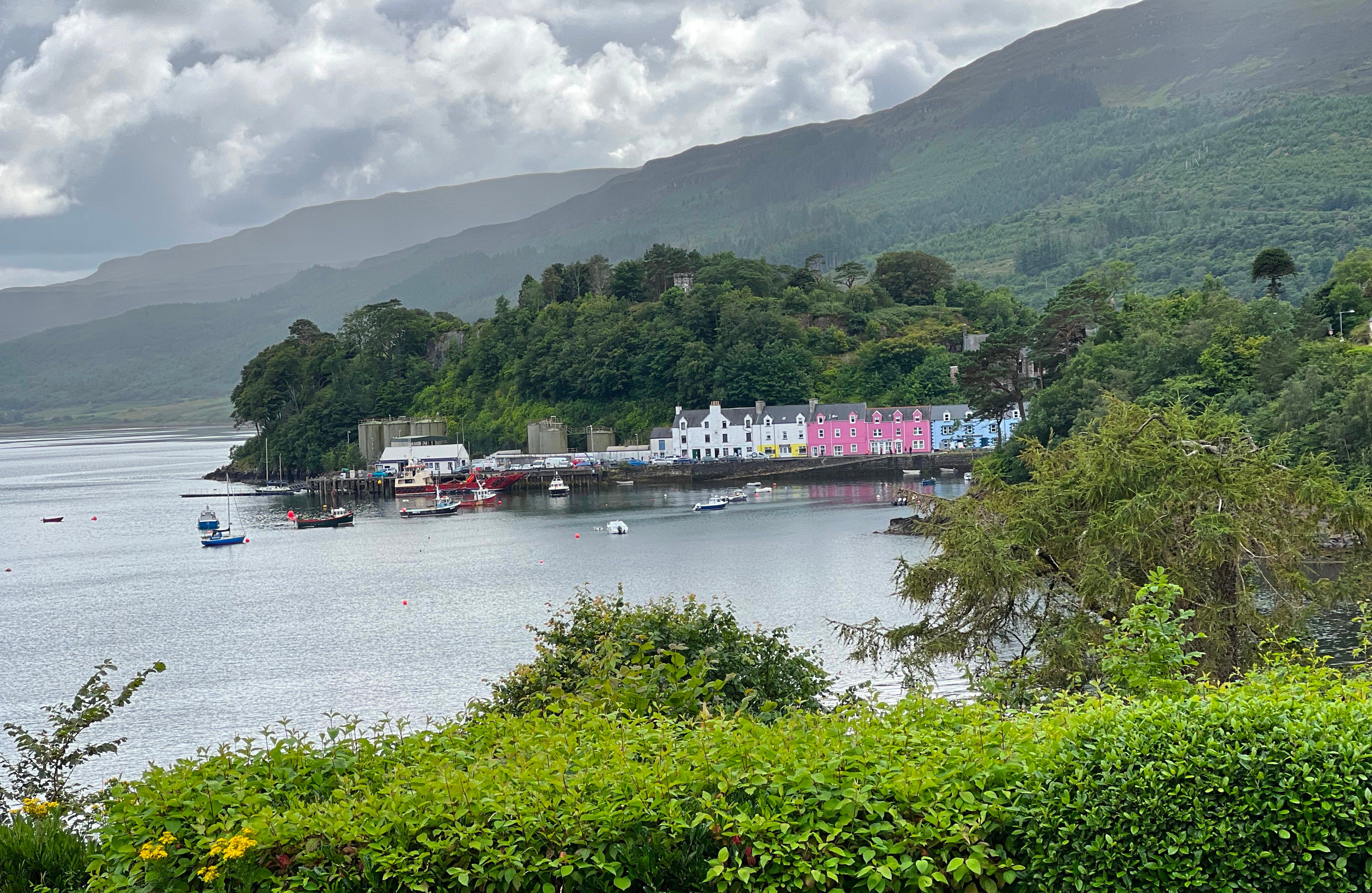
Ah, Britain! The land of rolling green fields, stately homes, white cliffs and The Beatles. The place where people are either upper-class and speak like the late Queen, or working class and sound vaguely like Dick Van Dyke’s chimney sweep in Mary Poppins.
At least, that sometimes seems to be the Britain Americans have in mind.
I recognize that country. I’m just not sure I recognize it as the whole country I grew up in.
I spent most of the first 40 years of my life in Britain before eventually moving to the United States. Living on both sides of the Atlantic has given me an interesting perspective on the way Americans see Britain - and the way we Brits see ourselves.
Some of the stereotypes have a grain of truth in them. Others are decades out of date. And a few are just plain funny.
London Isn’t Britain
To many Americans, visiting Britain seems to be synonymous with visiting London.
Ask someone where they went on vacation and you’ll often hear, “We went to London,” even if much of the trip was spent hundreds of miles away.
I understand why. Heathrow is the principal gateway for millions of American visitors, and London has Buckingham Palace, Westminster Abbey, the Tower of London and most of the other British landmarks that appear in American movies and television shows.
But London isn’t Britain any more than New York City is America.
I grew up in Britain, but London was never the center of my universe. And the farther you travel from the capital, the more obvious it becomes that Britain is a collection of remarkably different places squeezed into a relatively small island.
Scotland isn’t England. Wales isn’t England. Northern England isn’t southern England. Cornwall sometimes seems to regard itself as a separate country altogether.
Which brings us to accents.
There Is No Such Thing as a “British Accent”
Americans frequently refer to someone having a “British accent.”
But which one?
British people have an ear for accent subtleties akin to the way a dog can sniff the air and tell that a poodle walked past twenty minutes ago.
We can often tell not only which part of the country someone comes from, but sometimes their social background as well, after hearing them speak only a few sentences.
Accent and class have traditionally gone hand in hand in Britain.
When I was a college student in the late 1960s and early 1970s, most television and radio broadcasters spoke what we thought of as “BBC English”—the carefully enunciated speech associated with the educated classes of southern England.
Thankfully, things are much more egalitarian now. Turn on British television today and you’ll hear accents from all over the country.
Sometimes rather challenging ones.
I frequently watch British television shows with my American wife, and we often end up turning on the subtitles. This becomes almost mandatory when the drama ventures much farther north than London.
And sometimes the problem isn’t the accent at all. It’s the words.
When I first moved to San Diego in the early 1990s, my then-wife, who was Scottish, was driving around town when she realized the car was almost out of gas.
She stopped at a shopping center and called out, in a heavy Scottish accent:
“Can anyone tell me where the nearest petrol garage is?”
Blank looks.
A few people simply ignored her, perhaps assuming she was some sort of crazy foreigner.
Eventually someone who had recently visited Britain understood what she wanted and directed her to a gas station a few blocks away.
Petrol. Gas.
Garage. Gas station.
Two countries separated by a common language, as the old saying goes.
No, It Doesn’t Rain All the Time
Then there’s the British weather.
“Foggy old England” still seems embedded in the American imagination, perhaps thanks to Sherlock Holmes, Victorian London and countless movies involving cobblestones, gas lamps and mysterious figures emerging from the mist.
There was once some truth behind the image. The infamous Great Smog of London in 1952 was a genuine catastrophe and helped lead to Britain’s Clean Air Act a few years later.
But modern Britain isn’t permanently shrouded in fog.
Nor does it rain every day.
British weather is certainly unpredictable, and winter can be cold, damp and depressingly grey. But summers can be beautiful. Temperatures are generally less extreme than in much of the United States, although increasingly hot European summers are making air conditioning considerably more attractive than it was when I lived there.
When I was growing up, air conditioning in a British house would have seemed absurd.
These days, perhaps not so much.
Snow is another misconception. Much of Britain gets relatively little of it. A few inches can bring parts of the country to a standstill, which provides endless amusement to Americans accustomed to winters in places like Minnesota, Michigan or upstate New York.
All Right, Let’s Talk About British Teeth
We knew we were going to get here eventually.
Americans seem fascinated by British teeth.
The stereotype isn’t really that British people don’t look after their teeth. It’s that they don’t necessarily expect teeth to look the way Americans do.
The United States places enormous cultural emphasis on the perfect smile: straight, even and impressively white.
Britain traditionally put rather less emphasis on the cosmetic side of things. Orthodontics certainly exists, and British attitudes are changing, but the pursuit of the dazzling Hollywood smile has never been quite as deeply embedded in the culture.
When you’ve lived in America for a long time, you notice the difference.
So yes, you may encounter more imperfect smiles in Britain.
But Austin Powers was perhaps exaggerating.
And Yes, British Food Used to Be Pretty Awful
This one is harder for me to defend.
When I was growing up, much British food really was awful.
Vegetables could be boiled until they had surrendered both their texture and any lingering hope of nutritional value. Meat was often cooked until there was no possibility whatsoever that it might still be alive.
Things have changed enormously.
Modern Britain has excellent restaurants and an extraordinarily diverse food culture. Indian food in particular has become so thoroughly absorbed into British life that curry regularly competes for the unofficial title of the country’s favorite food.
And a good Sunday roast—roast beef, roast potatoes, Yorkshire pudding, vegetables and gravy—is still one of my favorite meals.
Notice that I said a good Sunday roast.
On a recent trip to Scotland with my wife, I enthusiastically explained what a treat she was in for when we ordered one at a restaurant.
What arrived was a tasteless, chewy hunk of beef.
Maybe some things never change.
“Have You Met the Queen?”
I’ve been asked this by Americans more than once.
Britain has around 70 million people, so the statistical likelihood that every British person is personally acquainted with the Royal Family is fairly low.
But I have to admit that my own answer is slightly more complicated.
No, I never met Queen Elizabeth II.
But she once walked across a hallway just a few feet in front of me when she visited the university where I was teaching.
There was no eye contact, no royal conversation and, sadly, no invitation to Buckingham Palace.
My main impression was how surprisingly small she seemed.
I can do slightly better with King Charles.
When I was at college, I shared an apartment with a Romanian princess who had apparently been a childhood playmate of the then Prince Charles.
So I suppose that puts me only a couple of degrees of separation away from actually knowing a royal.
Perhaps the Americans who asked me weren’t so far off after all.
Britain Is Small. Getting Around It Isn’t Always Quick.
Americans sometimes underestimate Britain because it looks so small on a map.
And by American standards, it is.
You can drive from southern England to Scotland in the time it takes to cross a couple of large American states.
But that doesn’t mean every journey is quick.
Britain has an excellent network of motorways—the British term for freeways—but once you leave them, distances become deceptive. Head into rural Scotland, Wales, Cornwall or parts of northern England and a relatively short distance on the map can involve hours on narrower, slower roads.
Try driving from the far southwest of England to the north of Scotland and you’ll discover that Britain doesn’t feel quite so small after all.
The compensation is the scenery.
Once you get into the Scottish Highlands in particular, you can find yourself traveling slowly through some of the most awe-inspiring landscapes anywhere in the world.
Sometimes crawling along isn’t such a bad thing.
The Britain I Remember Isn’t Quite There Either
There’s another side to all this.
I’ve lived in America for more than three decades now, which means something rather strange has happened.
Britain changed while I was away.
So did I.
When I go back, I’m still unmistakably British. I recognize the humor, the language, the places and the little cultural signals that are almost impossible to explain to someone who didn’t grow up there.
But I’m also now looking at Britain partly through American eyes.
Things that once seemed completely normal can suddenly seem peculiar. Things I once complained about can seem rather wonderful.
And sometimes I find myself remembering a Britain that doesn’t really exist anymore.
Perhaps that’s the most interesting thing about leaving the country where you grew up.
You don’t simply leave a place behind.
The place moves on without you.
And after enough years have passed, you discover that you’re not quite the person who left it either.
If you enjoyed this, subscribe to A Few Years Ahead. I write about life, Britain and America, technology, music—and what I've learned from occasionally getting things right.